Saudi Arabia Implements New Sugar-Based Customs Classification for Food and Beverages
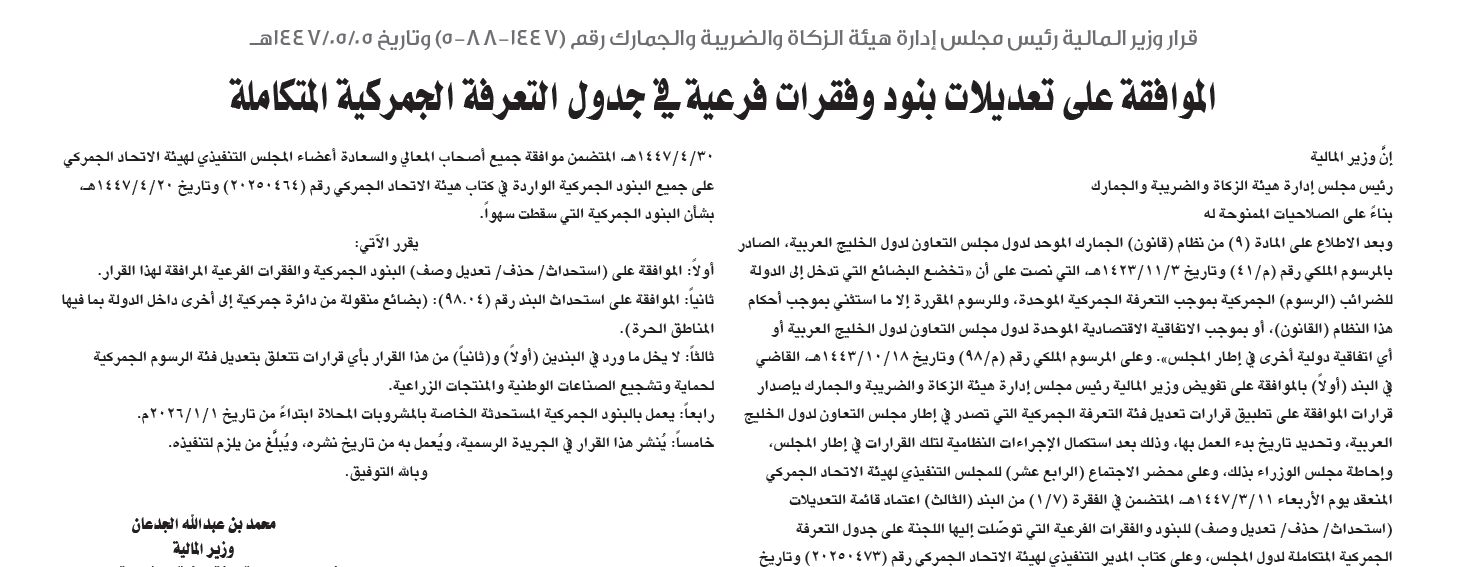
Saudi Arabia's Ministry of Finance and ZATCA have issued Decision No. 5-88-1447, introducing detailed sugar content classifications for many HS codes of food and beverage products under four main tiers, effective January 1, 2026.
November 27, 2025 – Saudi Arabia's Ministry of Finance and the Zakat, Tax and Customs Authority (ZATCA) have issued a comprehensive update to the integrated customs tariff schedule, introducing detailed sugar content classifications that will significantly impact the food and beverage industry.
Key Changes Overview
Minister of Finance and Chairman of ZATCA's Board Mohammed bin Abdullah Al-Jadaan issued Decision No. 5-88-1447 dated 1447/05/05H, approving amendments to items and sub-items in the integrated customs tariff schedule for GCC countries.
The amendments primarily introduce new subcategories for hundreds of food and beverage products based on their added sugar or sweetener content, with four main classification tiers:
- Products sweetened only with artificial sweeteners (no added sugar)
- Products with added sugar/non-artificial sweeteners less than 5g/100ml
- Products with 5 to 7.99g/100ml of added sweeteners
- Products with 8g/100ml or more of added sweeteners
All affected product categories maintain a 5% customs duty rate.
Major Product Categories Affected
Dairy Products and Milk-Based Beverages
The amendments introduce extensive classifications for dairy products, including:
- Cream products with varying fat content
- Milk-based beverages containing less than 75% milk content
- Flavored milk preparations for beverage manufacturing
- Sweetened condensed milk products
Cocoa and Chocolate Products
New classifications cover:
- Cocoa powder preparations with added peptone or milk
- Liquid concentrates and pastes containing cocoa
- Various cocoa-based beverage preparations
Fruit and Vegetable Juices
Comprehensive subcategories have been created for:
- Citrus juices: Orange, grapefruit, pomelo, and lemon juices (both frozen and non-frozen, concentrated and non-concentrated)
- Other fruit juices: Pineapple, grape, apple, cranberry, mango, guava, and carrot juices
- Mixed juices: Both fruit and vegetable juice mixtures
Non-Alcoholic Beverages
The document extensively classifies:
- Mineral water for athletes
- Tea and coffee beverages
- Lemonade syrups
- Orange syrups
- Cola beverages (e.g., Pepsi Cola)
- Flavored carbonated waters
- Non-carbonated flavored beverages
Beverage Preparations
New codes cover:
- Fast-dissolving preparations
- Tea preparations mixed with milk powder
- Preparations for making lemonade and other beverages
- Muscle development preparations
- Cocoa-based beverage mixes
Special Classifications
The amendments also address:
- Dairy alternatives: Milk-based beverages and substitutes containing less than 75% milk
- Sports drinks: Specifically classified mineral waters for athletes
Implementation Timeline
The decision states that newly introduced customs items for sweetened beverages will be effective from January 1, 2026. The overall amendments were published in the Official Gazette and became effective upon publication on November 27, 2025.
Industry Impact
This granular classification system represents a significant shift in how food and beverage products are categorized for customs purposes in Saudi Arabia. While the tariff rate remains at 5% across all sugar content levels, the detailed tracking may support:
- Better monitoring of sugar content in imported products
- Alignment with public health initiatives
- Enhanced data collection for health and nutrition policy planning
- Potential future differentiation of tariff rates based on sugar content
Importers and manufacturers should review their product formulations and ensure accurate classification under the new system to maintain compliance with customs regulations. The detailed categorization will require precise product labeling and documentation regarding sweetener and sugar content for all affected food and beverage imports into Saudi Arabia.
Related Insights
UAE Introduces Tiered Sugar Tax System for Sweetened Beverages
The UAE Ministry of Finance and Federal Tax Authority have announced a revolutionary amendment to excise tax on sugar sweetened beverages, introducing a tiered volumetric model that directly links tax value to sugar content per 100ml.
Oman to Reject Halal Certificates from Non-FSQC-Designated Bodies from 1 July 2027
Oman's Food Safety and Quality Center (FSQC) has announced that, from 1 July 2027, Halal Certificates accompanying imported food consignments will not be accepted if issued by a Halal Certification Body that has not been designated by the Center. Importers must verify their certification bodies' designation status before contracting.